January Despatch - Is “Double Standard” becoming the phrase of the year?
Double Standard, Elon Musk biography, and Peak China?

Dear Readers,
Happy Chinese New Year!
I am glad to continue sharing my thoughts on things that piqued my interests (geopolitics, energy transition, China, UK Politics) as well as joys and reflections in my life through the format of a monthly "Despatch" newsletter. You last heard from me when I studied as a Schwarzman Scholar in China. To bring you up to speed, I am now working at Chatham Hosue (The Royal Institute of International Affairs), a policy think tank that is best known for its RULE (singular, not plural), back in London. My research allows me to explore the geopolitics of energy transition, from tracking COP28 to analysing China's clean energy diplomacy. To kick off, I am leading with a lecture at Chatham House that got me thinking.
At a glance this month:
"Double Standard": Phrase of the Year?
Elon Musk: A Disappointing Half-time Biography
Cuba's Low Carbon Contradiction: Degrowth and Ecosocialism
China's Economic 4D Problem: Peak China?
1st January Hampstead Heath Walk: No New Year Resolutions
"Double Standard": Phrase of the Year?
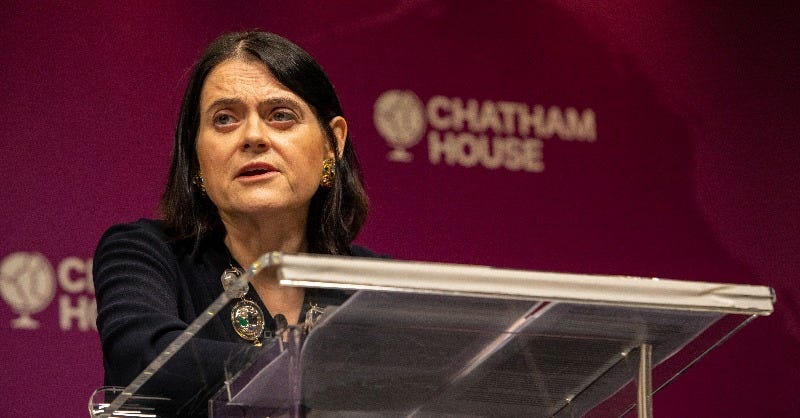
In her Chatham House Director's Annual Lecture 2024 titled "In defence of democracy – not double standards", Bronwen Maddox successfully raised everyone's eyebrows by addressing the Western hypocrisy allegation. As the Director of a world-renowned Western think tank founded to maintain a multilateral system post-war, I praise her for tackling this ever-important question head-on.
She states:
The second point I want to discuss is the charge of double standards against the West, and particularly the US. It's an old accusation, with much force to it, that has become white-hot in the arguments over Ukraine and over Israel's actions in Gaza following Hamas's attacks of October 7.
…
The charge of hypocrisy is an old one. It runs like this: 'the West cares about democracy but not when it wants to install leaders it likes in other countries. It respects sovereignty except when it doesn't, say, in Iraq. It argues for self-determination in Taiwan but not in Catalonia. It supports human rights, but not in countries from which it needs oil. It defends human rights until it gets too difficult - as in Afghanistan'.
Yet, this is a familiar expression. I remember the FT's Martin Wolf calling out Western hypocrisy at Chatham House's London Conference in 2023 and consequently writing about it in his columns, urging the West to "recognise its hypocrisy". Recognising hypocrisy in the international system stops short of fixing a fractured world. I want to make three points:
Owning up to the charge is just a starting point. This accusation exists for good reason. It is hard to be cynical towards the accuser when the West repeatedly cite "rules-based international order" but goes quiet as Israel becomes the subject. Take Ukraine, for example; many developing countries recognise the brutality and violation of human and legal rights following Russia's full-scale invasion. And yet, the lack of support from the West when Global South finds itself in a similar situation might explain its relative apathy toward Ukraine. You can look to Sudan and the eastern Congo.
One must be aware of the power of moral claims in international affairs before exercising it. Too often, I am troubled by whether there's ethical leadership in foreign policy. The West has too often failed to live up to its purported moral integrity with scandals at home and selfish approaches abroad. As we learned from China's Belt and Road experience, African leaders do not prefer a moral lecture and being told what to do over concrete railroads and ports. I fear that parading with moral superiority might continue to hinder meaningful global cooperation on issues such as climate change. I am genuinely interested in, although I have no solution to, how one should exercise moral values in foreign affairs. No doubt, morality matters.
How do we change it? It is counterproductive to have continued "whataboutism" in debates on foreign affairs, as countries get defensive when accused of their failings. On some immediate challenges, such as the Isarel-Hammas conflict, I agree with Bronwen that "the US and Europe should make clear to Israel that while its wish to eradicate Hamas is justifiable, it is pursuing a military course unlikely to achieve that goal, and the level of civilian casualties is intolerable." In the long run, with a gradual power shift, we need to be imaginative to remould global governance, which necessarily requires some concessions from the West that can accommodate new bargains demanded by the Global South. But this does not imply that the West must be the losing one. And 2024 is an opportunity for many politicians to take this issue to the polls to convince voters how they can still benefit from these new bargains.
The discussion over the "double standard" of the Global West has gained momentum over the past few months and will likely lead to many conversations on international affairs in the coming month. In accepting that "double standard" might become the phrase of the year, an objective audience also needs to look beyond the Global West. The West is only part of the problem. John Ikenberry has raised the hypocrisy of the Global South in its dealings with other countries, too: one second, they criticise and condemn developed countries on a moral level, and the next, they are bargaining for more money. And it is hard to overlook the number of Global South elites educated in prestigious Western institutions. A new arrangement in global affairs without double standards from any participant is needed, and it must manifest in bilateral and multilateral engagements. It is easier said than done.
Elon Musk: A Disappointing Half-time Biography
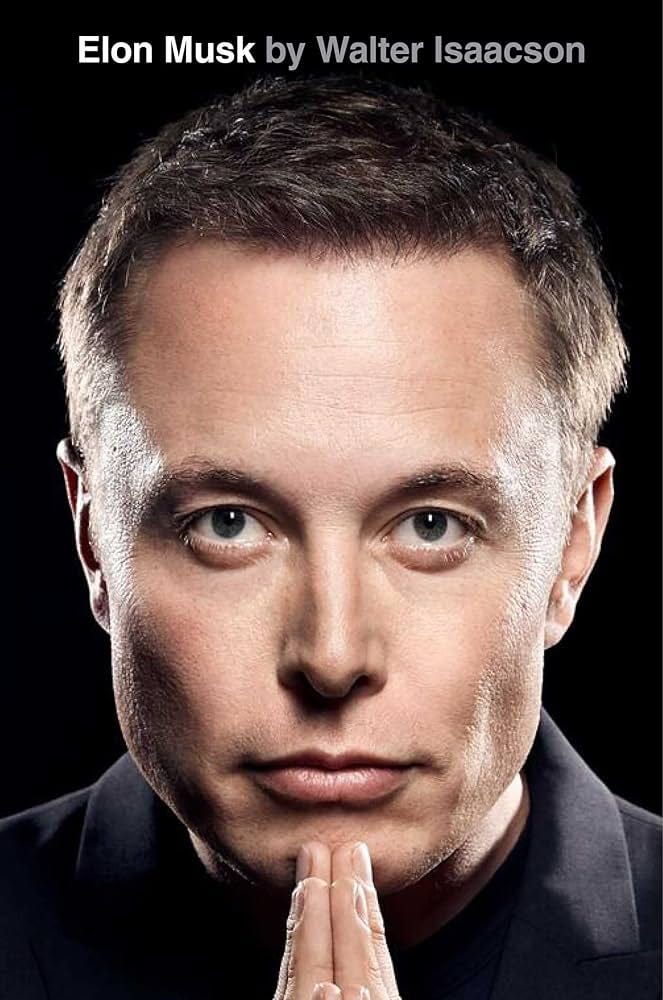
I am not a big fan of this biography by Walter Isaacson, whose work on Steve Jobs was an enjoyable read. I find the notion of writing a biography of someone who is still building their businesses odd. It is only half-time in Musk's game, hindering the author from making judgements. That being said, the public deserves to understand the man better, given Musk's influence. However, this book does not do enough to reveal the real Musk. First, the book is too long and reads like a diary accounting for Musk's activities. Second, the author's worship of "innovation" makes him overlook other criticisms facing Musk. Third, although Isaacson described some of Musk's cruel and awful behaviours, it eventually excused him for them. And I do not find it convincing.
Not liking the biography does not suggest that I hate Elon Musk. Instead, I do find something inspirational in his life journey. I am amazed by how one's personality shapes one's drive and ambition. The book also vividly demonstrates how family upbringing can profoundly impact one's personality.
I had a few takeaways:
How can private businesses influence international politics? Big companies are increasingly becoming non-state actors that can decide people's lives and deaths. Musk's military influence in Russia's invasion of Ukraine is a good example.
It is painful to build a business, and you shouldn't let failures stop you. One's drive should come from one's ambition to solve a bigger problem.
Double standard - no one is morally perfect. Musk accuses Bill Gates of betraying his environmental cause when Gates shorted his Telsa stock. And yet, Musk's vigorous defence of free speech was constrained by his consideration for business operations in China.
Cuba's Low Carbon Contradiction: Degrowth and Ecosocialism
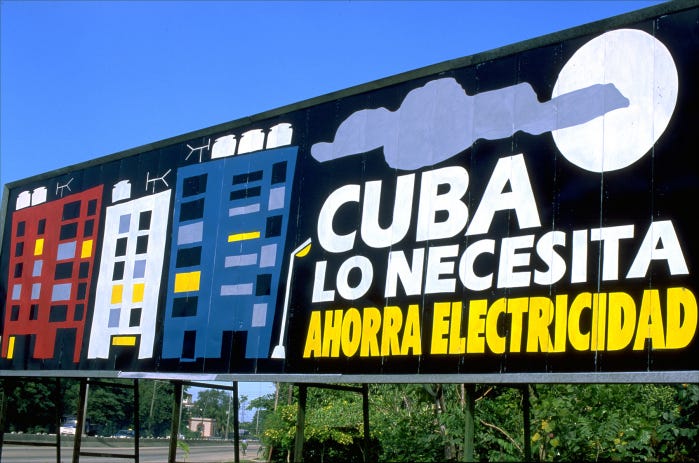
In January, I completed a book review for a journal. With my growing interest in energy transition and Latin America, a colleague's recommendation of "The Low-Carbon Contradiction" by Gustav Cederlöf immediately got my attention. In this book, the author Gustav Cederlöf does a great job of telling the tale of radical transformation in Cuba's energy sector since the Cuban Revolution of 1959 in five short chapters. Yet, as the name suggests, recent Cuban history is full of tensions, namely those "between degrowth-inspired and eco-socialist trajectories." For Cederlöf, the principal contradiction lies between the socialist political project sustained by fossil-fuelled economic growth and state interventions dedicated to a low-carbon economy built on non-growth-based social values. Threading these contradictions together are relevant themes of energy security, degrowth, and energy justice.
It may be surprising to many that Cuba was the only country to achieve "sustainable development" according to the Human Development Index formulated by the Worldwide Fund in 2006. John Urry refers to the 'Cuban miracle' in his book Societies Beyond Oil, asserting that Cuba has a life expectancy on par with the US but "uses only about one-tenth of the USA's energy per person." The book alternates between some technical content and Cuba's environmental history. Although it was not the easiest read, it was certainly interesting to see how Cuba's experience might offer insights for our current discussion on net-zero transition, a daunting task that requires immense policy innovation and political will.
China's Economic 4D Problem: Peak China?
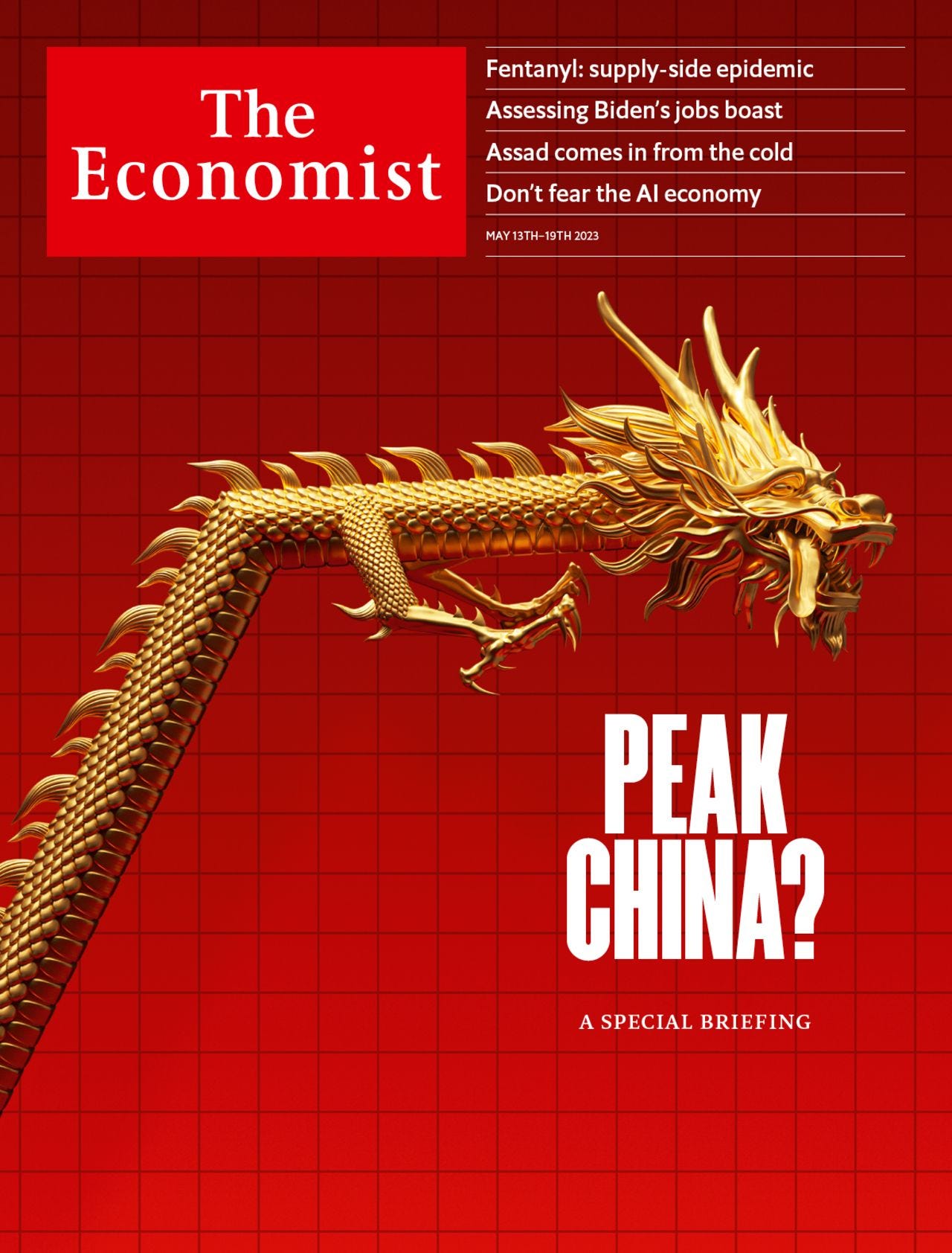
I have long been a fan of Zongyuan Zoe Liu's work. I came across her participation in a Foreign Affairs event recording in November 2023 with a provocative and disputable title, "Who Killed the Chinese Economy?". "Killed the Chinese Economy" might be an overkill. But there is no denying that China's economy is in deep trouble.
I want to credit Zoe for her "4D" analogy, which I found memorable in describing problems facing the Chinese economy. The problems are Demographic, Debt, Demand and Decoupling. Three are structural, and one is geopolitical. Does this shed light on the depth of China's economic trouble? Whatever you believe in, this 4D phrasing deserves to be known by more people.
I struggled to position myself in the "whether China peaked?" debate. CPC International Minister Liu Jianchao's defence offered at his Council on Foreign Relations lecture was that you should view China's economic growth less in percentage terms but in absolute values. As the economy grew, today's 5% exceeded the double-digit growth at the beginning of this century. I found this argument reasonable but not the most convincing. The optimist in me thinks that China has the potential to overcome the economic decline, yet I struggle to identify new growth engines as FDI dries up. Green technology, such as EV manufacturing, might be a boost. However, as the Western market increasingly restricts China's access through regulations and protectionist measures, I am unsure how sustainable the green growth might be. China might find new and growing markets in the Global South, which equally needs clean tech for green transition.
1st January Hampstead Heath Walk: No New Year Resolutions
Walking around Hampstead Heath is relaxing. Doing so with friends on the first day of 2024 brought me more joy than I could imagine. The walk cleared my mind and helped me focus on the present.
Wearing a pair of Hunter boots was proven a smart decision. Friends with trainers who struggled in the mud thought so, too, regretfully. (Thinking of mud and inappropriate footwear, I made a mistake of my own of spontaneously singing up for a Park Run after a night out, where I crashed at a friend's with no running shoes but my Stan Smiths. I was proud to have completed an almost cross-country-like run with mud and paddles of rainwater despite later injuring my ankle. But the experience could be more enjoyable if I got the shoes right.)
New Year's Day Hampstead Heath was chilly but packed with people and dogs braving the weather. We made it to a cosy pub, the Magdala, before the rain. Lucky us. Much of my joy derived from my group and our conversations. Invited by a Schwarzman friend, I went along with a close friend from university. Mixing with new people in the group always brings excitement. Sharing New Year resolutions and reflections brings out a sense of thrill. Sometimes, you can open up to strangers more easily and with almost no baggage. Having people openly and trustingly share their resolutions with you is also refreshing. Having made resolutions in previous years, my annual failure to meet those objectives made me more reluctant to come up with new ones this year. With no New Year resolutions, I hope to count more on immediate action than long-term plans. Just do it.
In the following weeks, I learnt that one friend on the walk got engaged to his partner two weeks into January. Congratulations. I wasn't the only one who benefited from the walk.
------------------------------------------------------------------------------------------------------
As always, I appreciate your interaction with my thoughts. Please leave any comments or feedback below. If you enjoyed reading this post, please share my newsletter with people you think might also fancy it.